
Communication: The Hidden Multiplier of Influence
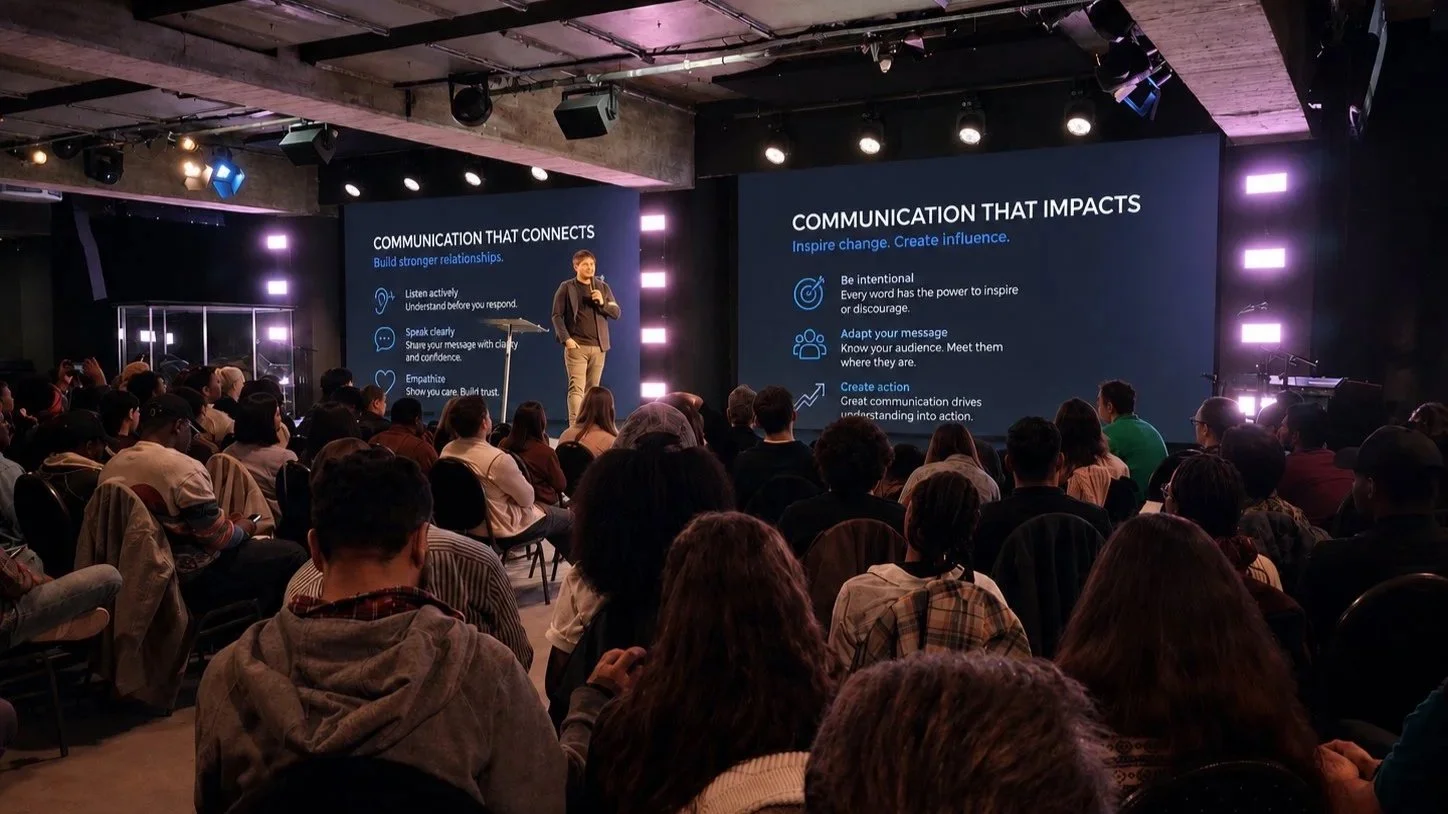
Seven Word Summary: Communication is the hidden multiplier of influence.
Most founders I have worked with underinvest in communication. Not because they do not believe in it, but because they think it can wait.
Get the product right first. Build the team. Close the revenue. Then worry about how you talk about it.
The cost of that sequence is usually higher than people realise. Because communication is not a downstream activity. It is a multiplier and like any multiplier, leaving it unattended does not keep things flat. It compounds in the wrong direction.
Here is what I have consistently seen…
Two organisations. Comparable products. Comparable teams. One grows, the other stalls.
The difference, more often than not, is not capability. It is not even strategy. It is how clearly one of them can communicate what they do, why it matters, and who it is for. Marketing is part of this.
Many treat marketing as a separate function when at its core it is communication.
How you show up on LinkedIn, how you write a proposal, how your website speaks to a first time visitor, how your team talks about what you do at a conference. All of it is communication. And all of it either builds or erodes the case for why someone should choose you.
Good products do not automatically find their audience. Strong teams do not automatically align behind a vision. Great ideas do not automatically get acted on.
Communication is what allows everything else to travel. Without it, capability stays local. With it, the same capability reaches further, moves faster, and compounds over time.
I see a version of this inside organisations too.
A founder carries a clear picture of where the business is going. The team is working from fragments. Partial briefings, assumptions, their own interpretation of what matters.
The gap between what a leader believes they have communicated and what the organisation has actually understood is almost always wider than either side realises.
That gap costs time, alignment, and in fast-moving environments, momentum. It is a negative multiplier quietly working against everything the business is trying to build.
Externally, the stakes are the same.
The best communicators I have encountered across different markets are rarely the loudest. They are the clearest. And they are, consistently, the best listeners.
Communication is not what you say. It is what the other person receives.
Most organisations optimise for the output. The deck, the campaign, the announcement. Without thinking carefully about what lands on the other end. Audiences are more saturated than ever. What cuts through is not volume. It is specificity, consistency, and the sense that whoever is speaking actually understands the person they are speaking to.
Done well, that builds trust. And trust, compounded over time, is one of the most durable growth assets a business can have.
A word on storytelling, because it is often misread.
It is not a marketing function. It is the answer to a question every stakeholder, customer, investor, employee, partner, is silently asking: why does this organisation exist, and why should I care?
The organisations that answer that question consistently, across every touchpoint, create something difficult to replicate. People talk about them when they are not in the room. That is not a marketing outcome. That is a multiplier, one that keeps working long after the campaign ends or the press release fades.
None of this requires a large team or a large budget. It requires clarity of thinking, discipline of expression, and the willingness to keep asking whether the message is actually connecting.
The organisations I have seen grow consistently treat communication as a capability they build deliberately, not a problem they solve reactively. They think about it early, invest in it structurally, and return to it regularly, because the message that works in one phase rarely works unchanged in the next.
Communication is not a soft skill. It is infrastructure. And when it is built well, it does not just support everything else. It multiplies it.

About the Author
BENJAMIN LIM — PRINCIPAL ADVISOR, STRATEGY & GROWTH
Benjamin is an experienced consultant and advisor, with a demonstrated history of delivering measurable results across a range of industries.
He brings skills and expertise in Leadership, Management, Organisational Growth and Development, Strategic Business Development, and Marketing Strategies.
With global business development and commercial acumen, Benjamin is able to help our clients future-proof their organisation.
Ready to continue the conversation?
Let’s talk — hello@sevenpatterns.com